

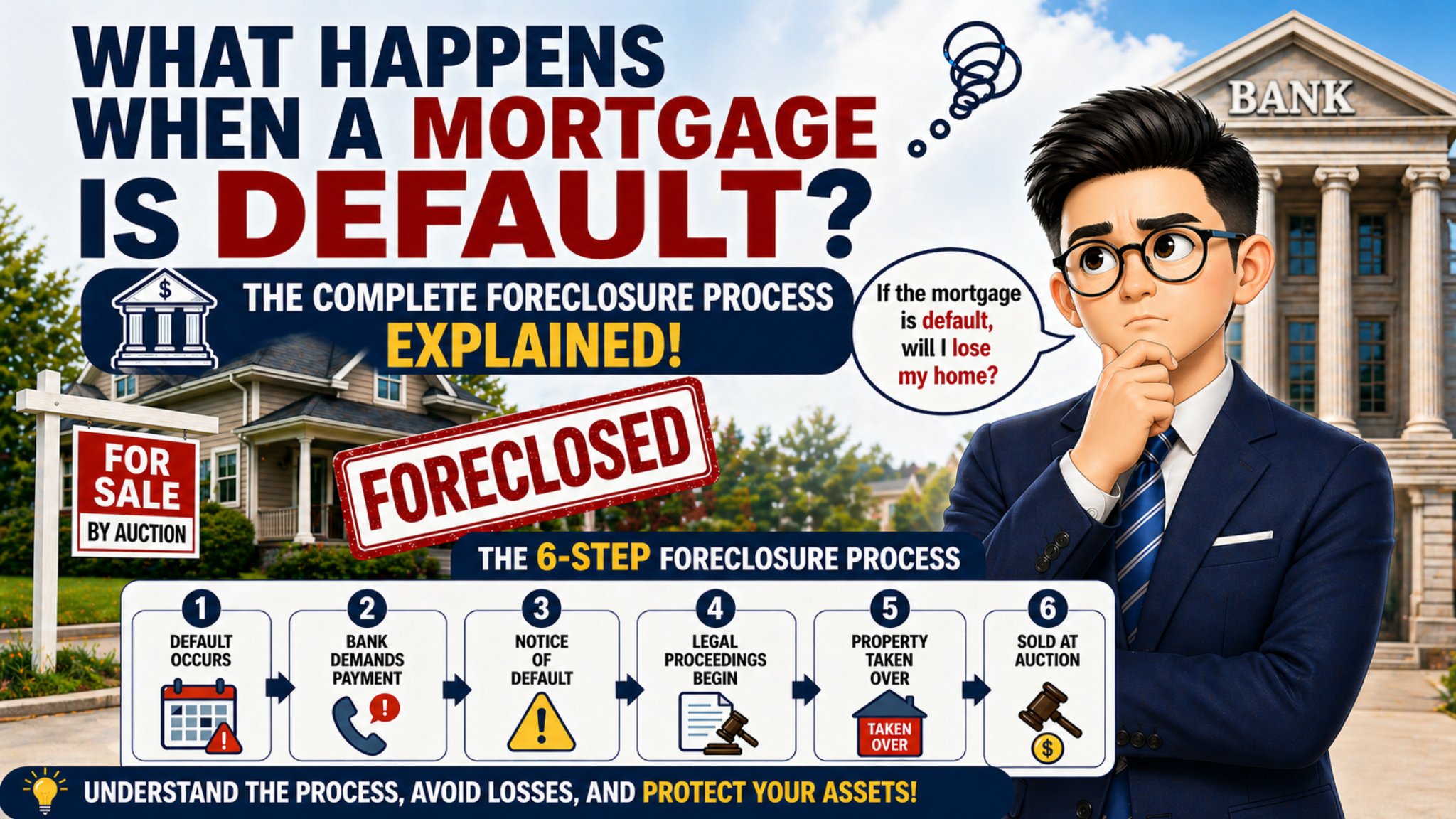
 If your mortgage goes into default, one of the biggest questions is:
👉 Will I lose my home?
The answer is: Not immediately—but the risk is real.
In Canada, mortgage default triggers a legal foreclosure or power of sale process, and understanding the timeline is critical to protecting your assets.
In this guide, you’ll learn:
- What mortgage default actually means
- The step-by-step foreclosure process
- How long it takes
- What options you may still have
What Is Mortgage Default?
A mortgage is considered in default when:
- You miss one or more mortgage payments
- You fail to meet lender obligations (insurance, taxes, etc.)
👉 Once default happens, the lender has the legal right to start recovery action
Step-by-Step: Foreclosure / Power of Sale Process
Step 1: Default Occurs
- Missed payments trigger default status
- Lender begins monitoring and internal escalation
👉 At this stage, you may still fix the issue quickly
Step 2: Bank Demands Payment
- Lender contacts you (calls, letters, notices)
- Requests overdue payments + possible penalties
👉 Early communication is critical
👉 Ignoring this stage makes things worse
Step 3: Notice of Default
- Formal Notice of Default is issued
- Legal countdown begins
In Ontario (Power of Sale):
- Typically 15-day notice period before next step
Step 4: Legal Proceedings Begin
If unresolved:
- Lender initiates legal action
- Property may be listed under Power of Sale (Ontario) or foreclosure (other provinces)
👉 This is where control starts shifting away from the owner
Step 5: Property Taken Over
- Lender takes possession (or effective control)
- Property is prepared for sale
👉 Owner may lose decision-making power at this stage
Step 6: Sold (Often by Auction or MLS)
- Property is sold to recover the loan
- Could be:
- Auction
- MLS listing (common in Ontario Power of Sale)
👉 If sale price < mortgage owed:
You may still owe the difference
How Long Does the Foreclosure Process Take?
Typical timeline (Canada / Ontario):
- Early default → legal action: 15–45 days
- Full process: 2–6 months (or longer)
👉 Depends on:
- Lender speed
- Market conditions
- Borrower response
Will You Automatically Lose Your Home?
👉 No—but risk increases over time
You may still have options early:
- Catch up on missed payments
- Refinance
- Sell the property yourself
- Negotiate with lender
👉 The earlier you act, the more control you keep
Key Risks Most Homeowners Ignore
❌ Waiting too long to respond
❌ Ignoring lender communication
❌ Assuming foreclosure is immediate
❌ Not exploring refinance options
👉 Biggest mistake:
Doing nothing
Power of Sale vs Foreclosure (Ontario Insight)
In Ontario, most cases use:
👉 Power of Sale (not traditional foreclosure)
Key difference:
- Property is sold to recover debt
- Excess funds (if any) go back to owner
- Faster than foreclosure
How to Protect Yourself
If you're facing mortgage stress:
✔ Talk to your lender early
✔ Explore refinancing or restructuring
✔ Consider selling before forced sale
✔ Work with an experienced realtor
👉 Strategy matters more than timing
Final Thoughts
Mortgage default is not the end—but it is a turning point.
👉 The process is structured
👉 Time-sensitive
👉 And financially critical
The earlier you act, the more options you keep.
FAQ
What happens if I default on my mortgage in Canada?
The lender can begin legal action, leading to power of sale or foreclosure.
How long before foreclosure starts in Ontario?
Usually after missed payments and a notice period (~15 days).
Can I stop foreclosure once it starts?
Yes, in early stages—by paying arrears, refinancing, or selling.
Will I owe money after foreclosure?
Possibly—if sale price doesn’t cover the mortgage balance.