

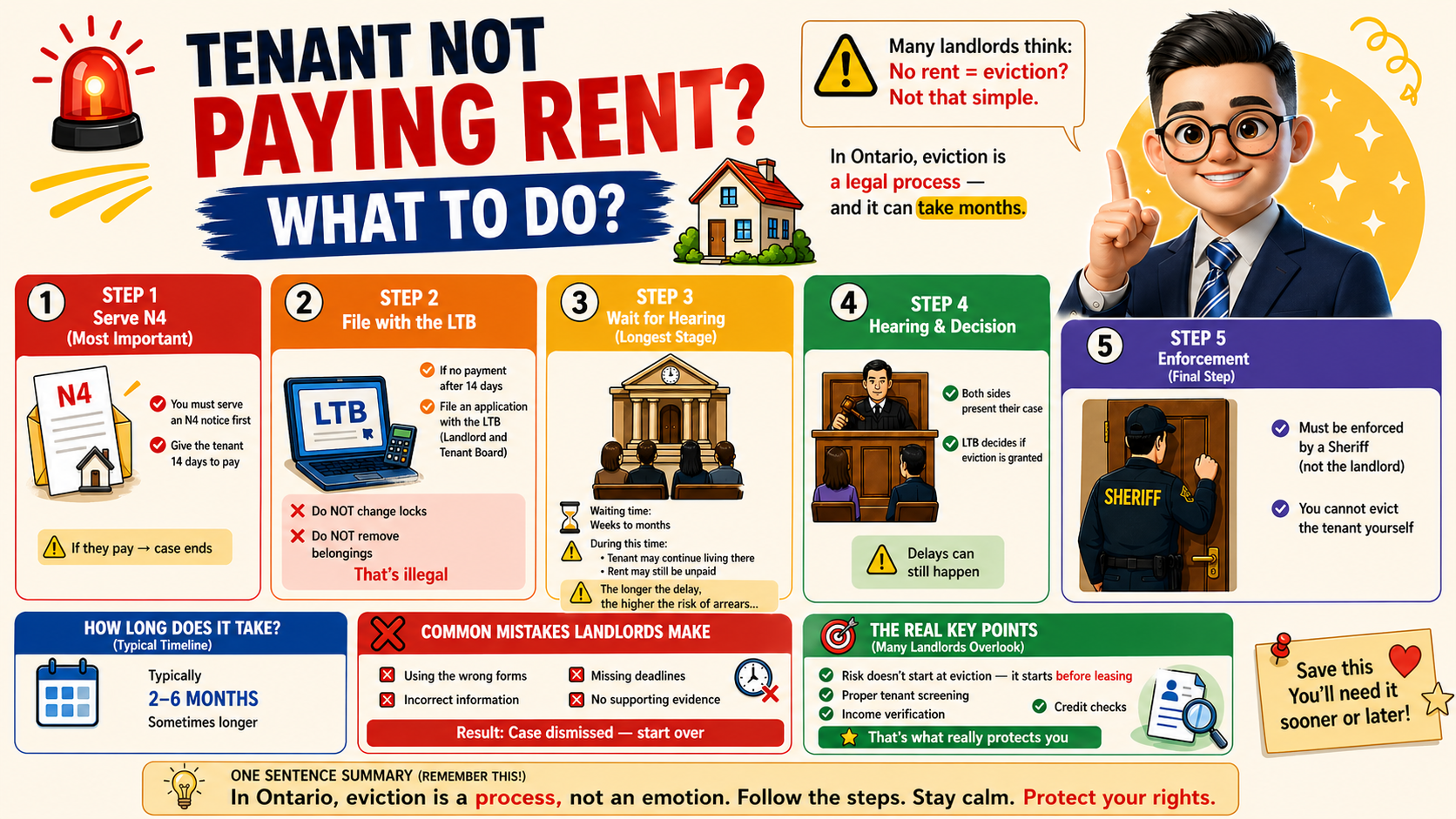
If your tenant is not paying rent in Ontario, you may be wondering:
Can I evict them immediately?
The short answer is: No.
In Ontario, eviction is a legal process through the Landlord and Tenant Board (LTB)—and it can take 2 to 6 months (or longer).
In this guide, you’ll learn exactly:
- The step-by-step eviction process in Ontario
- What you can and cannot do as a landlord
- Common mistakes that can delay or ruin your case
- How to protect yourself before problems start
Step-by-Step: Ontario Eviction Process for Non-Payment of Rent
Step 1: Serve N4 Notice (Mandatory First Step)
Before anything else, you must serve your tenant an:
👉 N4 – Notice to End Tenancy for Non-Payment of Rent
Key points:
- Tenant must be given 14 days to pay
- The notice must be filled out correctly
✔ If tenant pays within 14 days →
Eviction process stops immediately
Step 2: File an Application with the LTB
If rent is still unpaid after 14 days:
👉 File with the Landlord and Tenant Board (LTB)
Important:
🚫 You CANNOT:
- Change locks
- Shut off utilities
- Remove tenant belongings
👉 These are illegal in Ontario and can backfire heavily
Step 3: Wait for the Hearing (Longest Delay)
This is where most landlords underestimate the timeline.
Typical waiting period:
👉 Weeks to several months
During this time:
- Tenant can continue living in the property
- Rent may continue unpaid
👉 This is why early action is critical
Step 4: Attend the Hearing
At the LTB hearing:
- Both landlord and tenant present their case
- The adjudicator reviews evidence
- A decision is made
👉 Even here, delays or adjournments can happen
Step 5: Enforcement by Sheriff
Winning the case does NOT mean immediate eviction.
👉 You must:
- File for enforcement
- Wait for the Sheriff to carry out eviction
❗ Important:
Only a Sheriff can legally evict a tenant in Ontario
How Long Does Eviction Take in Ontario?
Typical timeline:
- Fast cases: ~2 months
- Average: 2–6 months
- Delayed cases: 6+ months
👉 Delays depend on:
- LTB backlog
- Errors in paperwork
- Tenant disputes
Common Landlord Mistakes (That Can Cost You Months)
Many eviction cases fail due to simple errors:
❌ Incorrect N4 form
❌ Missing information
❌ Filing too early or too late
❌ Lack of supporting evidence
👉 Result:
Case dismissed → You must start over
Can You Evict a Tenant Yourself in Ontario?
👉 Absolutely NOT
Even if the tenant hasn’t paid rent:
- You cannot lock them out
- You cannot remove their belongings
- You cannot force them to leave
👉 Doing so can lead to legal penalties and compensation claims
The Real Risk Most Landlords Ignore
Here’s the truth:
👉 The biggest risk is NOT eviction
👉 It’s poor tenant screening
To protect yourself:
✔ Verify income
✔ Check credit reports
✔ Confirm employment
✔ Review rental history
👉 Prevention is always cheaper than eviction
Final Thoughts
In Ontario, eviction is a process—not a quick solution.
To minimize risk:
- Act early
- Follow legal steps
- Avoid shortcuts
- Screen tenants carefully